
Understanding H-Pumps: Horizontal Pumping Systems for Surface Applications
· By Diego Cordova
How horizontal pumping systems work, how they borrow from ESP technology at the surface, and where they are used in upstream, midstream and downstream operations.
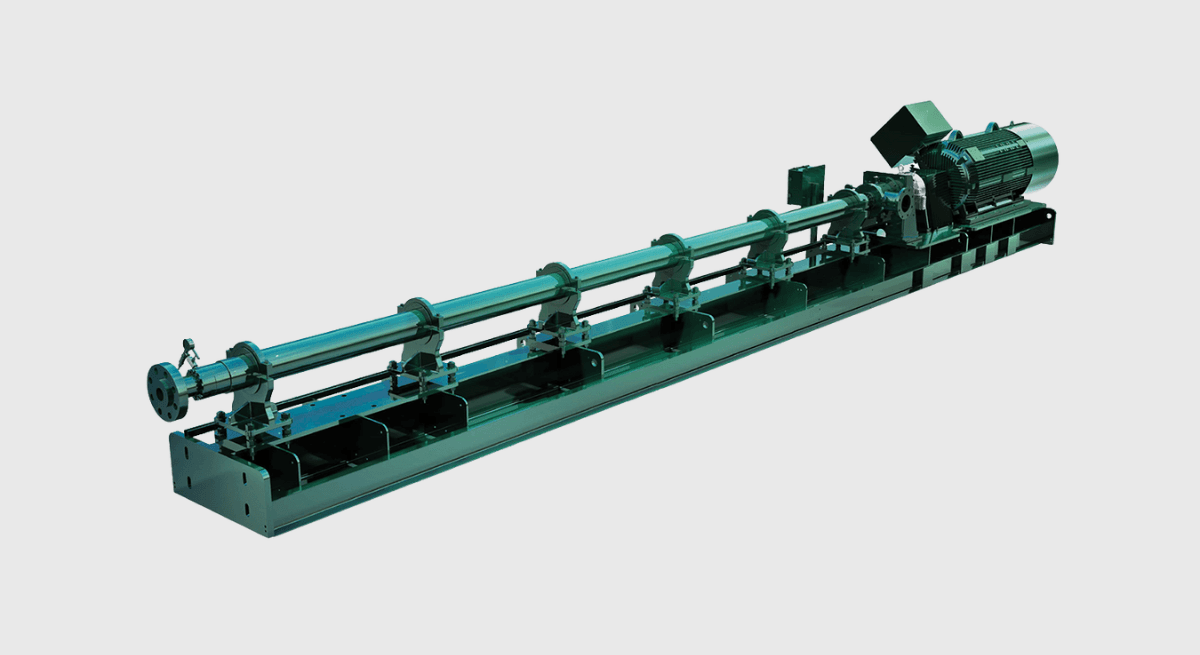
What is an H-Pump?
An H-Pump, or Horizontal Pumping System (HPS), is a multistage centrifugal pump designed for high-volume, high-pressure fluid transfer, typically mounted horizontally on a skid. While the technology borrows principles from downhole ESP (Electric Submersible Pump) systems, H-Pumps are deployed on the surface and engineered to handle a wide range of fluids and operating conditions.
They are commonly used in upstream, midstream, and downstream oil and gas operations, as well as in mining, agriculture, and industrial water systems.
How Do H-Pumps Work?
The core of an H-Pump is a multistage centrifugal pump—similar in design to an ESP motor—but mounted horizontally within a protective housing. Here’s how it operates:
- Fluid enters the suction end of the pump.
- It passes through a series of impellers and diffusers (each stage).
- Each stage increases the pressure and velocity of the fluid.
- The discharge side delivers the fluid at high pressure, often to pipelines, separators, injection wells, or storage.
A motor (often electric but can be gas-driven) powers the system, and a variable frequency drive (VFD) allows control over speed and flow rate.
H-Pumps vs ESPs: Key Differences
| Feature | ESP | H-Pump (ESP-H) |
|---|---|---|
| Installation Location | Downhole (inside well) | Surface-mounted |
| Maintenance | Costly and complex | Easier and lower cost |
| Cooling | Natural (well fluids) | Requires engineered cooling system |
| Accessibility | Limited (needs workover) | Full access at surface |
| Life Cycle Cost | High | Lower due to ease of service |
What Is an ESP H-Pump?
An ESP H-Pump refers to a horizontal pump that uses the same hydraulic section as a traditional ESP, but mounted on the surface. It retains the same key components—impellers, diffusers, shaft, bearings—but allows for improved accessibility and better thermal management.
These are often integrated into packaged systems with motors, seals, coolers, and controls.
Applications of H-Pumps
1. Oil & Gas Upstream
- Produced water transfer
- Water injection for pressure maintenance
- Artificial lift booster stations
- Multiphase fluid transfer
2. Midstream
- Pipeline boosting (oil, gas condensates, or water)
- Saltwater disposal (SWD) sites
- Crude oil or water gathering systems
3. Industrial/Other
- Mine dewatering
- Agricultural irrigation
- Reverse osmosis feed pumps
Advantages of H-Pumps
- Modular & Scalable: Can be easily resized or staged to meet changing demand.
- Compact Footprint: Skid-mounted designs reduce installation space.
- Low Maintenance: Easy to service compared to downhole pumps.
- High Efficiency: Suitable for wide range of flow rates (100–60,000+ BPD) and pressures (up to 3,000+ psi).
- Proven Technology: Uses ESP technology with decades of reliability data.
Design Considerations
When selecting an H-Pump, engineers evaluate:
- Flow rate and pressure requirements
- Fluid type and composition (oil, water, multiphase)
- NPSH available (Net Positive Suction Head)
- Cooling needs
- Seal and bearing selection
- Motor sizing and VFD compatibility
Leading Manufacturers
Major suppliers of H-Pump systems include:
- Summit ESP (Halliburton)
- Baker Hughes
- Novomet
- Schlumberger
- National Oilwell Varco (NOV)
Each offers modular packages tailored to flow, pressure, and control system needs.
Conclusion
H-Pumps—especially ESP-based horizontal systems—have become critical for modern oilfield and industrial fluid transfer. Their modularity, reliability, and adaptability to various fluids make them a preferred solution for surface pumping challenges. As unconventional oil production and water handling needs grow, H-Pumps offer a cost-effective and efficient alternative to traditional pumping methods.