
Distributed Temperature Sensing (DTS) in Oil Wells: What Actually Goes Down the Hole
· By Diego Cordova, President
How fiber optic DTS works downhole, why SAGD wells need hydrogen resistant fiber, and what to check in the cable before you run it. Field guide.
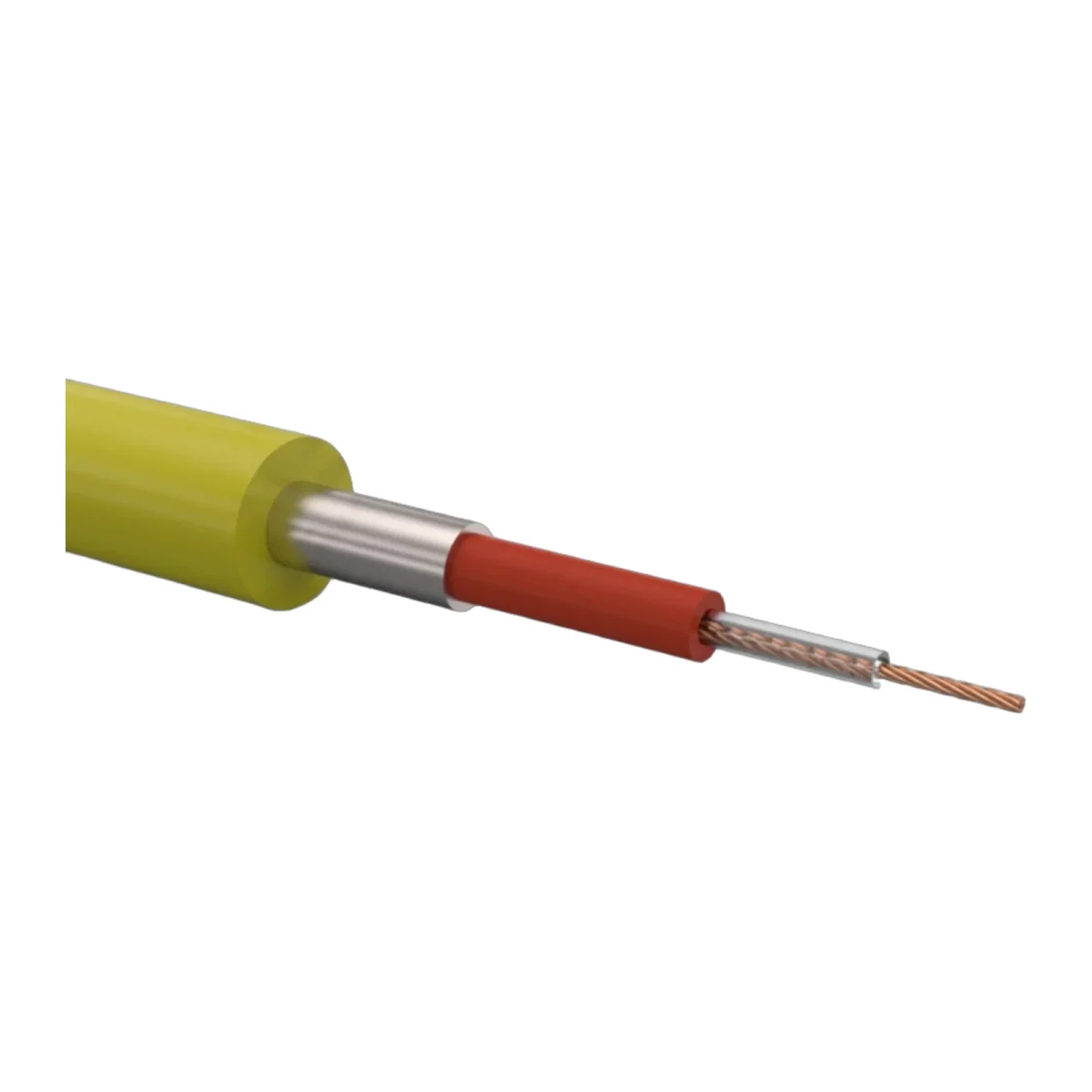
A DTS system turns a single optical fiber into thousands of thermometers. Strap it to the tubing or cement it behind casing, and you get a continuous temperature profile of the whole well, every metre, without a single electronic component downhole. In Alberta's SAGD wells it has become a standard tool to see where steam is going. The interrogator at surface gets most of the attention. The part that decides whether you still have data in year three is the cable.
This guide covers how DTS works, where it pays off, and what to check in the downhole fiber optic cable before it goes in the well.
How DTS works, in one paragraph
A laser pulse travels down the fiber. A tiny fraction of the light scatters back at every point along the way. Part of that backscatter, the Raman anti Stokes band, changes intensity with temperature, while the Stokes band barely does. The interrogator compares the two to calculate temperature, and uses the travel time of the light to know where along the fiber each reading comes from. Yokogawa's DTSX200, for example, resolves position to 1 m, so a 6 km fiber gives 6,000 measurement points. (Yokogawa technical report)
The trade off to keep in mind: temperature resolution depends on fiber length and averaging time. The same report quotes 0.7 °C for 6 km of fiber and a 10 minute measurement. Shorter fiber or longer averaging gives finer resolution.
DTS vs DAS
| DTS | DAS | |
|---|---|---|
| Measures | Temperature | Acoustic and vibration signals |
| Physics | Raman backscatter | Rayleigh backscatter |
| Typical fiber | Multimode | Single mode |
| Typical use | Steam conformance, inflow profiling, leak and crossflow detection | Flow noise, sand detection, frac and seismic monitoring |
DTS has traditionally run on multimode fiber (World Oil). Many new installations run both fiber types in the same tube, so one cable serves DTS today and DAS later. If there is any chance you will want acoustic data, ask for both fibers on day one. Adding a fiber later means pulling the completion.
Where DTS pays off
- SAGD and steamflood: see which sections of the horizontal take steam and which do not, and balance injector and producer subcool. SLB documents a Canadian SAGD well, 1,200 m with a 600 m horizontal at about 200 °C, where continuous DTS let the operator balance subcool, extend well life and improve recovery. (SLB case study)
- Inflow and injection profiling: temperature anomalies show where fluid enters or leaves the wellbore.
- Well integrity: leaks behind casing and crossflow show up as local temperature changes.
- Artificial lift: temperature at the pump intake and along the tubing helps diagnose ESP and PCP behaviour, alongside a permanent downhole gauge.
The cable: what goes in the hole
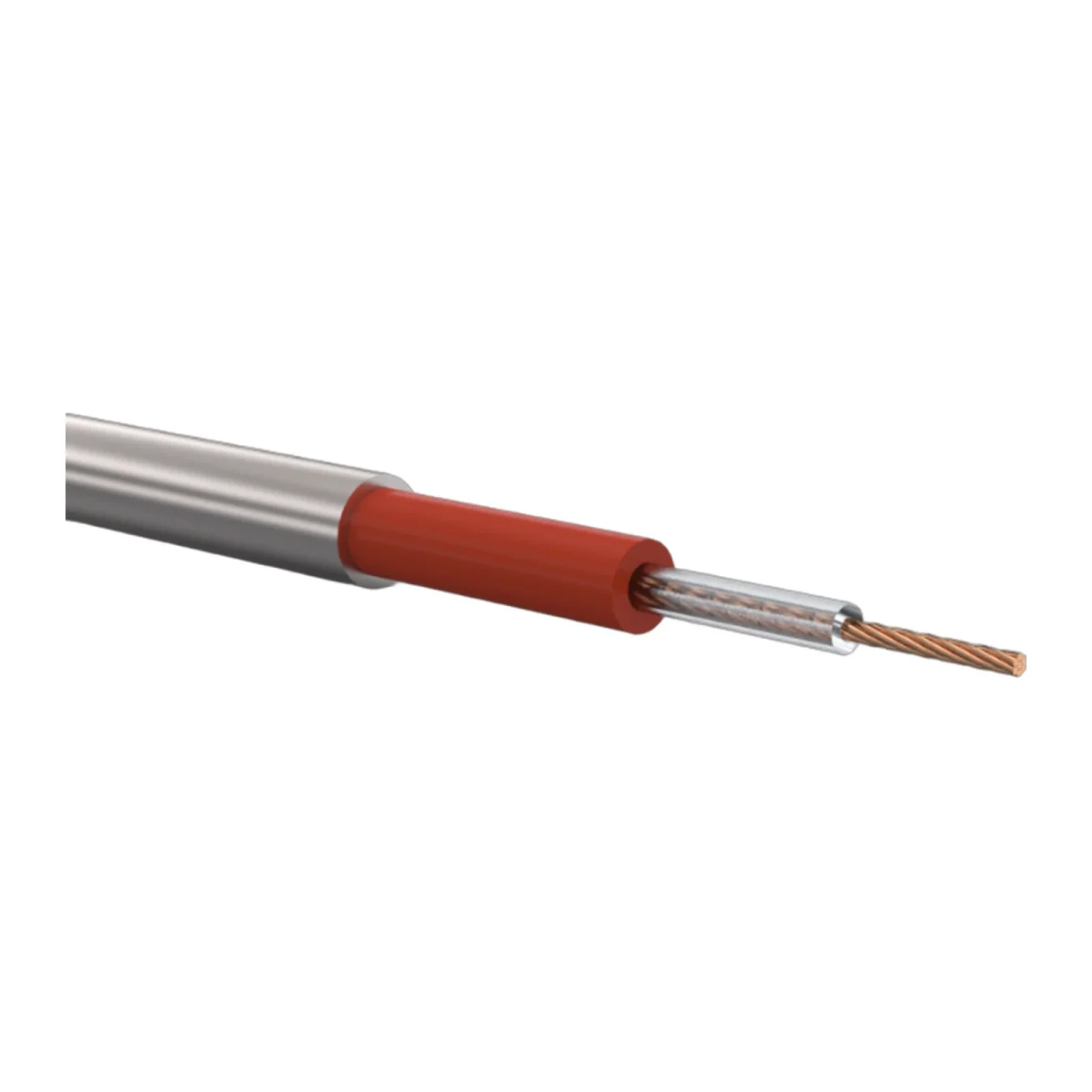
The standard construction is fiber in metal tube (FIMT), often encapsulated the same way as TEC:
- Fibers inside a sealed metal tube, typically 1/4 in (6.35 mm) OD.
- Tube material: 316L stainless steel for most wells; Incoloy 825 for more corrosive conditions.
- Encapsulation: 11 mm round or 11 x 11 mm square, in polypropylene, nylon, Santoprene or fluoropolymers (PVDF, ETFE, ECTFE, FEP) depending on temperature and fluids.
- Temperature ratings: commonly 85 °C, 150 °C and 300 °C classes.
(Construction data: Fibercore downhole fiber optic cable.)
If you have run TEC for a permanent downhole gauge, the handling is familiar: same tube size, same encapsulation, same clamps and wellhead outlet logic. The difference is what is inside.
Five things that kill DTS data (and how to avoid them)
1. Hydrogen darkening. Conventional fiber cores are doped with germanium to raise the refractive index. In hot, hydrogen rich wells, hydrogen reacts at those dopant sites and the fiber loses light, which distorts the temperature profile. In SAGD this used to be the number one reason DTS stopped working. The fix is hydrogen resistant fiber, such as pure silica or dopant free cores (World Oil). SLB reports a high temperature multimode fiber tested to 300 °C and 500 psi of hydrogen, with loss at or below about 0.25 dB/km per year versus about 12 dB/km per year for earlier fibers. Ask your supplier for the hydrogen test data, not just "hydrogen resistant" on the datasheet.
2. Wrong temperature class. A cable rated for 150 °C in a SAGD producer is a short term installation. Match the encapsulation and the fiber coating to the maximum steam temperature, not the average.
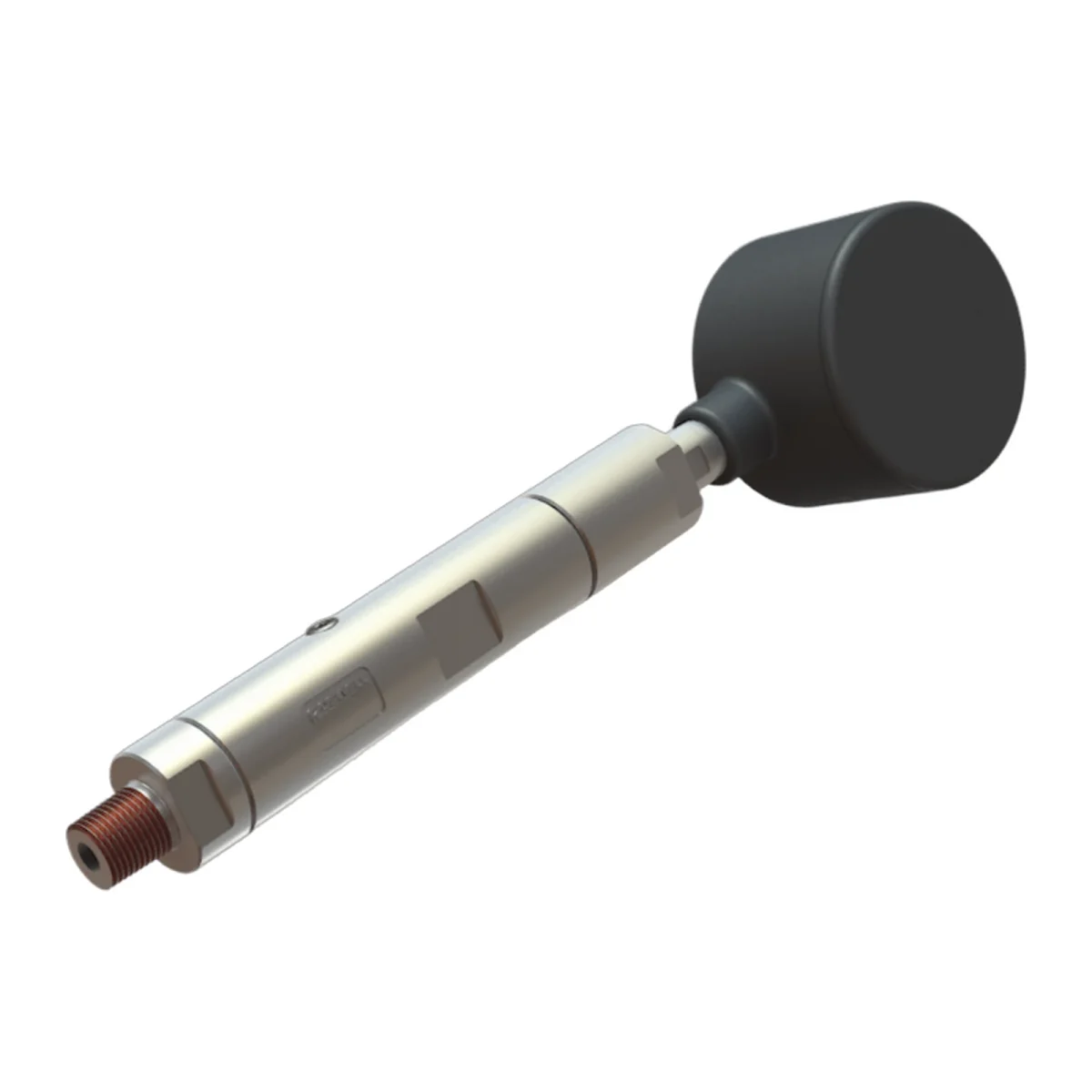
3. Damage during the run. Many fiber failures have a mechanical root: a crushed section at the tubing hanger, a missing clamp that let the cable rub against casing, or a bend tighter than the minimum radius on the spool. Clamp every joint, protect the cable across couplings, and follow the minimum bend radius during spooling and at the wellhead.
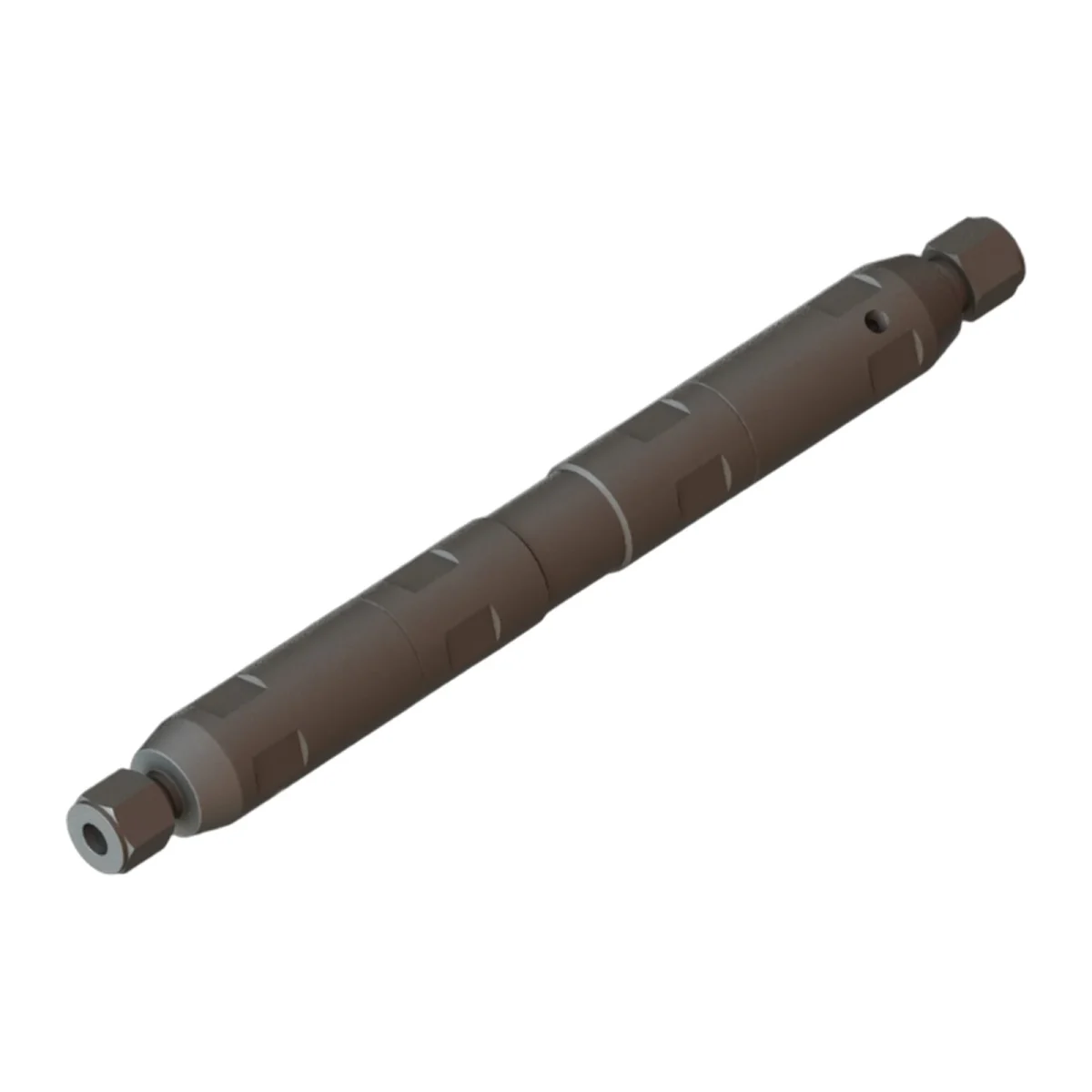
4. Too many splices. Every splice adds optical loss and a potential leak path. Order continuous lengths sized to the well, and plan the splice points (if any) before the job, not on the rig floor.
5. No baseline. Run an OTDR trace on the spool before the job and again after landing the completion. If something goes wrong later, the baseline tells you whether the fiber arrived damaged, was damaged during the run, or degraded in the well.
Quick checklist before you buy downhole fiber cable
- Number of fibers and type: multimode for DTS, single mode for DAS, or both.
- Hydrogen resistant fiber, with test data.
- Temperature class for the maximum well temperature.
- Tube material (316L or Incoloy 825) and wall thickness for the pressure and fluids.
- Encapsulation material and profile compatible with your clamps.
- Continuous length per spool and minimum bend radius.
- Factory OTDR report per spool.
- Compatible wellhead outlet and splice hardware.
FAQ
What is distributed temperature sensing (DTS)?
A method that uses a fiber optic cable as a continuous temperature sensor. A surface interrogator sends laser pulses and reads the Raman backscatter to calculate temperature at every point along the fiber, typically every metre.
Does DTS need power or electronics downhole?
No. The fiber is the sensor. All electronics stay at surface, which is why DTS works in high temperature wells where electronic gauges struggle.
What fiber does DTS use?
Traditionally multimode fiber. For hot, hydrogen rich wells like SAGD, use a hydrogen resistant fiber with a temperature rating above the maximum steam temperature.
What is the difference between DTS and DAS?
DTS measures temperature using Raman backscatter, usually on multimode fiber. DAS measures acoustic signals using Rayleigh backscatter on single mode fiber. One cable can carry both.
Can a DTS cable be installed like TEC?
Yes. Downhole fiber is usually supplied as fiber in metal tube with the same 1/4 in tube and 11 mm encapsulation used for TEC, strapped to the tubing with clamps or cemented behind casing.
Get the cable right
Energinn supplies the downhole side of the system: TEC, splice kits and wellhead outlets, specified for the well.
- TEC cable · 1/4 in · 11 mm PP round encapsulation
- TEC cable · 1/4 in · Bare
- TEC splice kit 10k psi
- TEC wellhead outlet 10k psi
- Related reading: Tubing encapsulated cable (TEC) in oil and gas